Warmth and Glow: Cozy Lighting Living Room Ideas
 Save
Save There is a specific kind of magic that happens when the sun dips below the horizon and you reach for a lamp instead of the big overhead light. It is the shift from functional brightness to a soft, amber-hued sanctuary. This guide offers concrete ways to curate that warmth through texture and light.
The Golden Rule of Kelvin
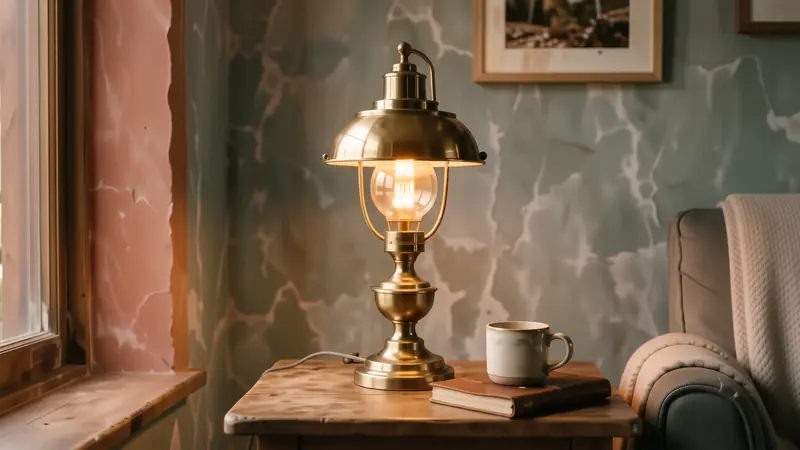
Stop using those bright white bulbs. They make a living room feel like a sterile dental office or a high-traffic grocery store aisle. To achieve true comfort, you need to look at the Kelvin scale on your bulb packaging.
Aim for 2700K or even 2400K if you can find them. This lower number produces that honeyed, candlelight glow we crave during a slow Sunday afternoon. If you live in a rental with harsh existing fixtures, simply swapping the bulbs is the fastest fix available.
- Warm white: 2700K
- Soft amber: 2400K
- Avoid ‘Daylight’ bulbs (5000K+)
A single lamp with a warm bulb can change your entire mood after 6:00 PM. It turns a room from a workspace into a nesting ground.
Layering for Depth
One single light source is never enough. If you only have one floor lamp, your corners will remain swallowed by heavy, uninviting shadows. Instead, think in layers: ambient, task, and accent.
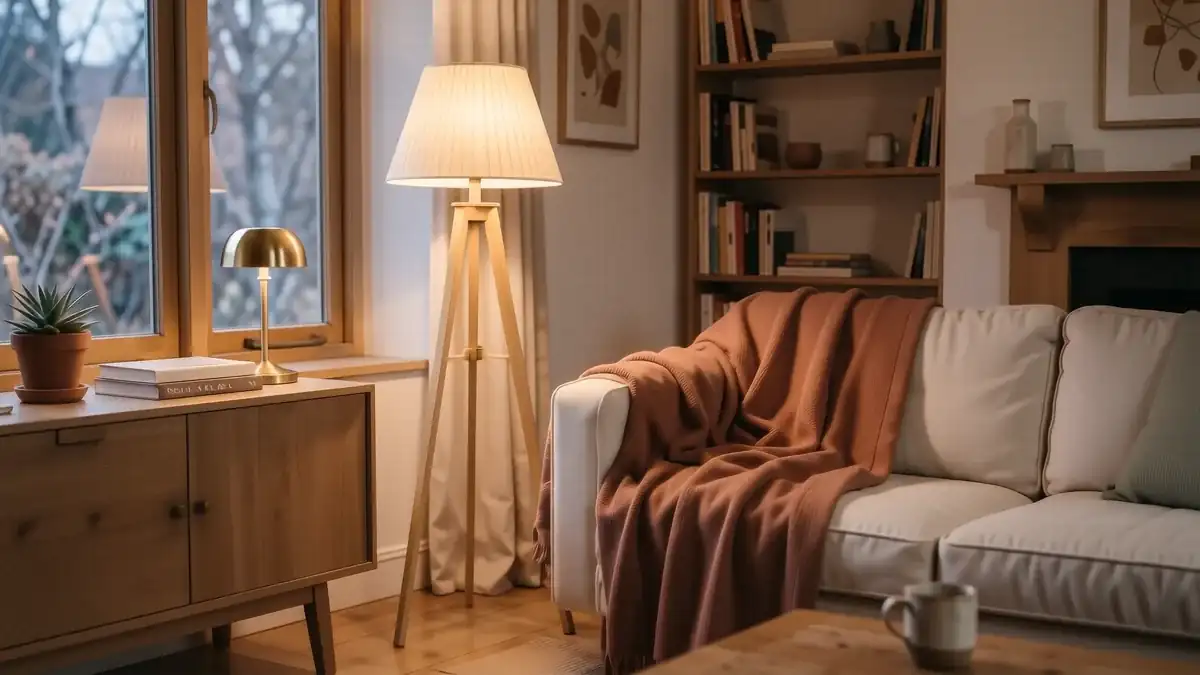
You might place a tall arched floor lamp over an armchair for reading, while small rechargeable cordless lamps sit on bookshelves to highlight ceramic vases. This creates pockets of light that draw the eye around the room. It prevents that flat, washed-out look common in many modern apartments.
Try placing a small accent light behind a large leafy plant like a Monstera. The shadows cast by the leaves against the wall add an organic, rhythmic texture to the space. This subtle trick makes the walls feel alive rather than static.
Fabric and Light Diffusion
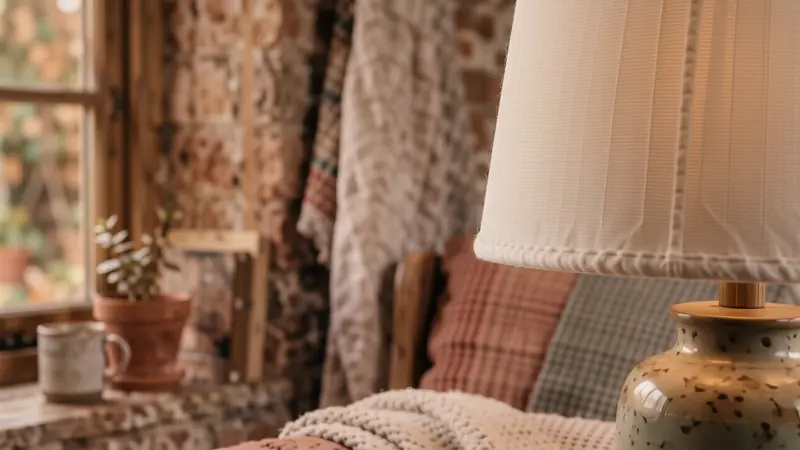
The material of your lampshade dictates how much ‘mood’ you actually get. A thin, white linen shade allows light to spill out the top and bottom, which is great for general visibility. However, a heavy pleated silk or textured parchment shade will diffuse the light more evenly, creating a soft, matte glow that feels much more expensive.
Avoid plastic shades at all costs. They tend to create harsh glares and sharp shadows that break the cozy spell. If you want something truly tactile, look for shades made from woven rattan or even fine boucle fabric.
These textures catch the light in small, beautiful ways. A linen shade might show a slight grain when backlit, adding a layer of visual interest to your corner. It turns a functional object into a piece of decor.
Renter-Friendly Glow
Living in a rental often means you cannot touch the wiring. Do not let this stop your decor progress. Battery-operated LED puck lights or fairy lights can be tucked into unexpected places to add charm without a single screw.
You could line the underside of a bookshelf with warm LED strips to create an under-glow effect. This mimics high-end built-in lighting at a fraction of the cost. Another trick is using plug-in wall sconces. These attach via adhesive hooks or small nails, giving you the look of permanent architectural lighting without the electrician’s bill.
- Plug-in sconces for walls
- LED strips for shelving
- Battery candles for mantels
Small changes make a big impact in tight spaces.
The Role of Texture
Lighting does not exist in a vacuum; it needs surfaces to land on. If your room is full of hard, reflective surfaces like glass coffee tables or polished marble, the light will bounce around too aggressively. This creates a jittery energy rather than a calm one.
To ground the light, introduce soft materials. A chunky wool throw in oatmeal or a heavy jute rug will absorb excess light and soften the overall atmosphere. When the glow from your lamp hits a velvet cushion, it creates deep, rich shadows that feel incredibly cozy.
Think about how light interacts with different surfaces. Matte finishes are your best friend here. A matte terracotta vase or a wooden tray will hold the light gently, whereas a glossy ceramic might create distracting bright spots.
Candlelight and Slow Living

Nothing beats the flicker of a real flame for pure, unadulterated hygge. While electric candles are convenient, nothing replicates the movement of a natural wick. Light a single beeswax candle on your coffee table during your evening wind-down routine.
Beeswax has a natural, subtle honey scent that isn’t as overwhelming as synthetic perfumes. It encourages a sense of slow living—the act of sitting still and watching the flame dance for ten minutes. This small ritual signals to your brain that the workday is officially over.
If you are worried about safety or pets, high-quality flameless LED candles with moving wicks have come a long way. Look for brands that use real wax coatings rather than cheap plastic. They look remarkably authentic from across the room.
Creating Zen Corners
Sometimes we need more than just a living room; we need a sanctuary. You can create a cozy zen room within your larger space by designating one specific corner for stillness. This area should have minimal distractions and very soft, indirect light.
A small paper lantern lamp is perfect for this purpose. The translucent paper provides an incredibly even, shadowless glow that feels meditative. Pair this with a floor cushion in a muted terracotta or sage green hue to define the space.
Keep the clutter away from this zone. A clean surface allows your eyes to rest and prevents the light from feeling frantic. It is about creating a visual vacuum where peace can settle.
The Evening Transition
The way you transition from day to night is vital for your circadian rhythm. As the afternoon light fades, begin turning off your bright overhead lights one by one. Replace them with lower-level lamps as you move through your evening tasks.
This gradual dimming helps your body prepare for sleep. It turns the act of ‘turning on the lights’ into a deliberate design choice rather than an afterthought. You might start with the kitchen pendant, then move to the living room floor lamp, and finally settle by the glow of a small reading light.
This sequence creates a sense of movement through your home. It makes the house feel like it is breathing with you as the day ends.
Frequently asked questions
What is the best bulb color for coziness?
Look for bulbs labeled 'Warm White' with a Kelvin rating between 2400K and 2700K. This provides the amber glow seen in traditional candlelight.
Can I make my room cozy without buying new lamps?
Yes, start by changing your existing bulbs to warmer tones or adding small battery-operated LED puck lights to shelves and dark corners.
How do I avoid harsh shadows in a living room?
Use multiple light sources at different heights rather than one bright overhead light. Layering floor lamps, table lamps, and accent lights softens the shadows.
Are LED candles as good as real ones?
High-quality wax LED candles with moving wicks are excellent for safety and ease of use, though they lack the scent of real beeswax.
More ideas → Cozy Living Room Ideas
Keep reading
Warm and Grounded Cosy Living Room Colors
Discover practical cosy living room colors to transform your space. From warm oatmeal to muted terracotta, learn how light and texture create comfort.
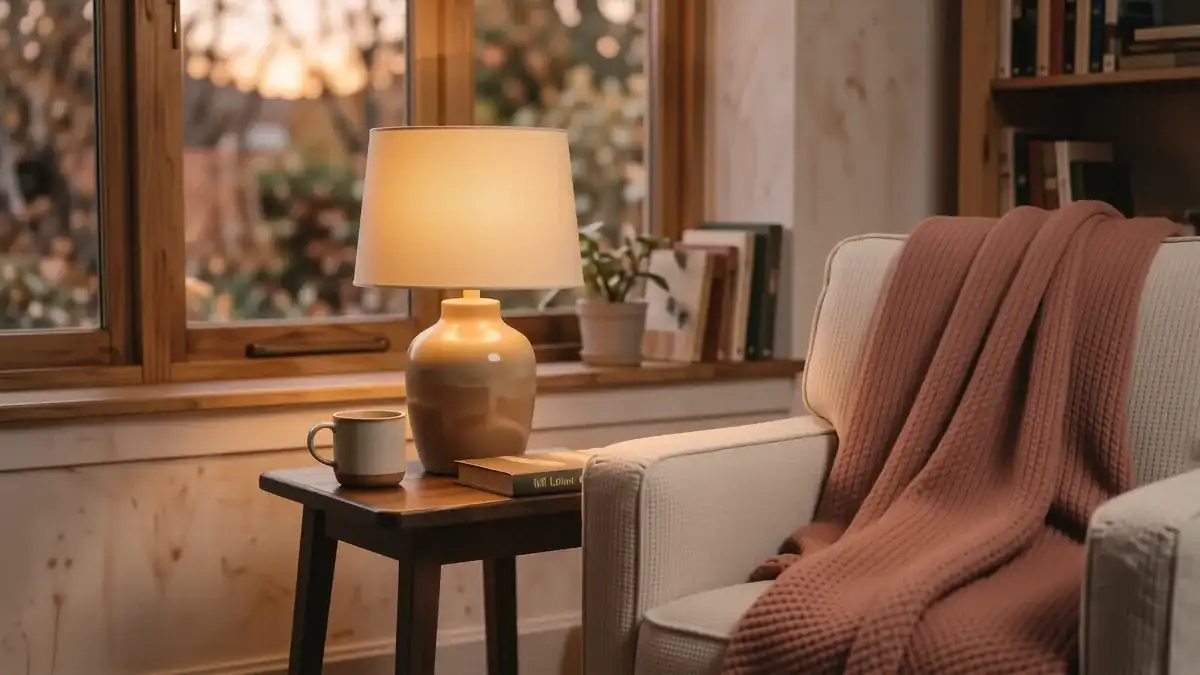
7 Cozy Room Lighting Ideas for a Warmer Home
Cozy room lighting ideas, room by room. Learn how to use warm tones, layered lamps, and soft textures to create instant hygge.
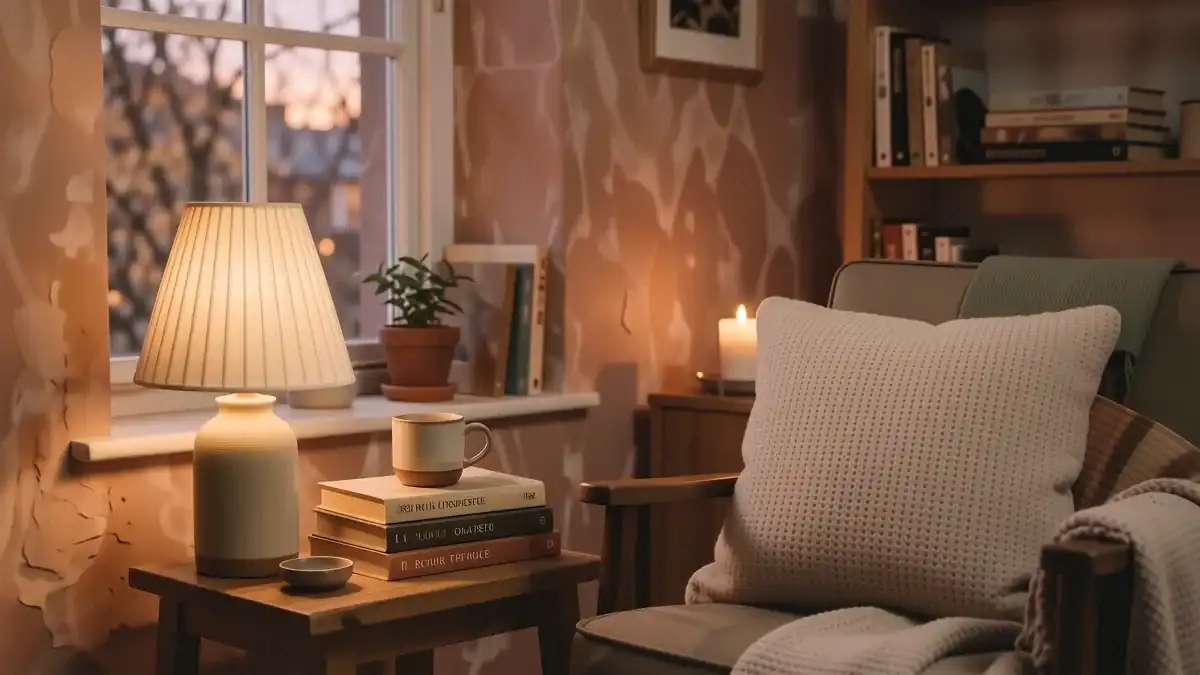
Warm and Cozy Apartment Lighting Ideas for Small Spaces
Cozy apartment lighting ideas you can pull off on a budget. From warm bulb temperatures to layered textures, create a sanctuary this weekend.
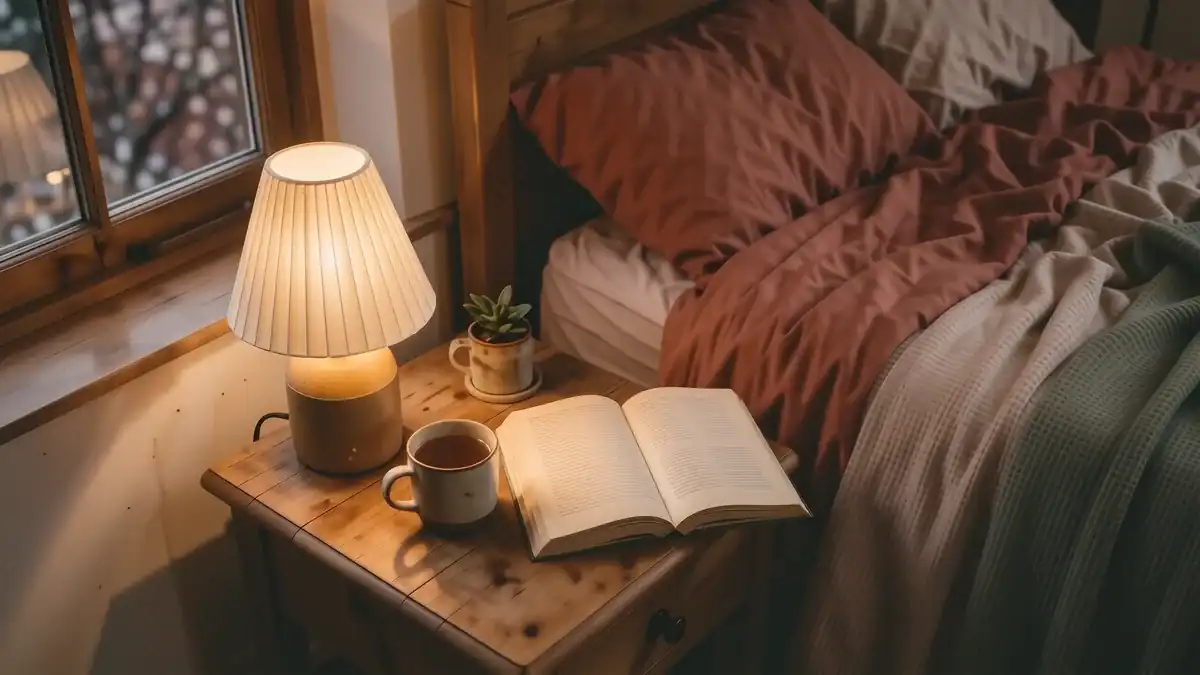
Warm and Cozy Bedroom Lighting Ideas for Your Sanctuary
Simple cozy bedroom lighting ideas that shift the whole mood. Learn how to use warm bulbs, layered lamps, and soft textures to create a restful retreat.