How to Style a Perfect Cozy Reading Nook Chair
 Save
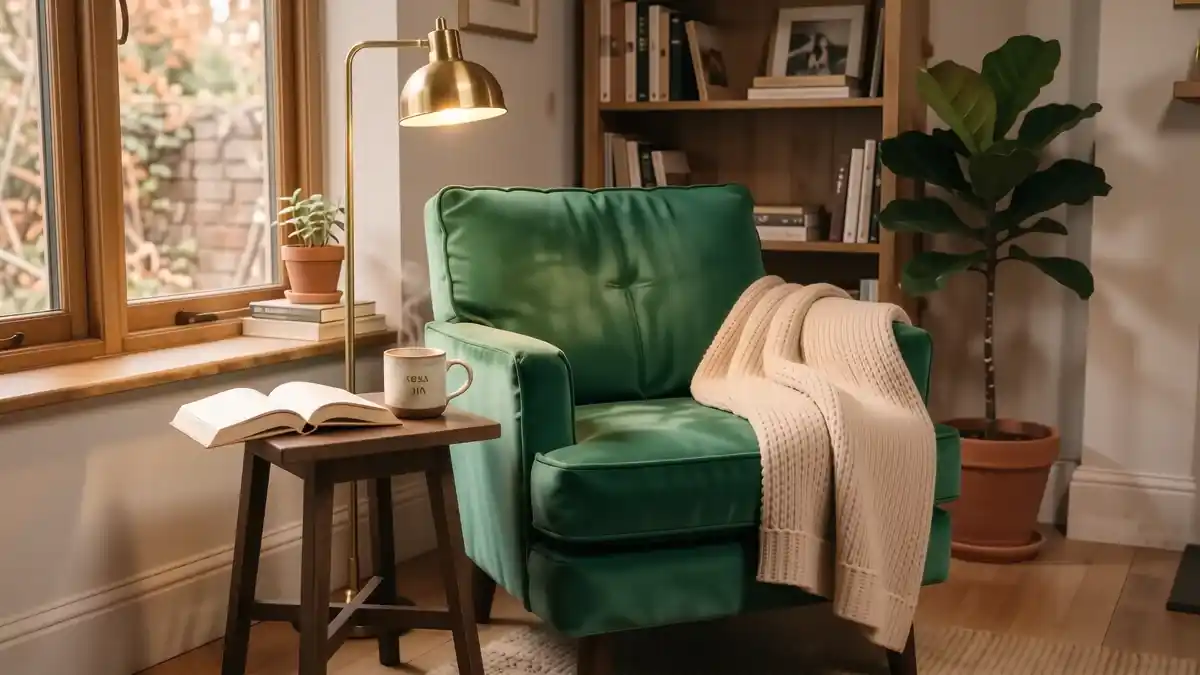
Save There is a specific kind of quiet that only exists when you are tucked into a soft corner with a heavy book. We want to help you build that sanctuary using real materials and simple layouts you can set up by Sunday evening.
Finding the Right Silhouette
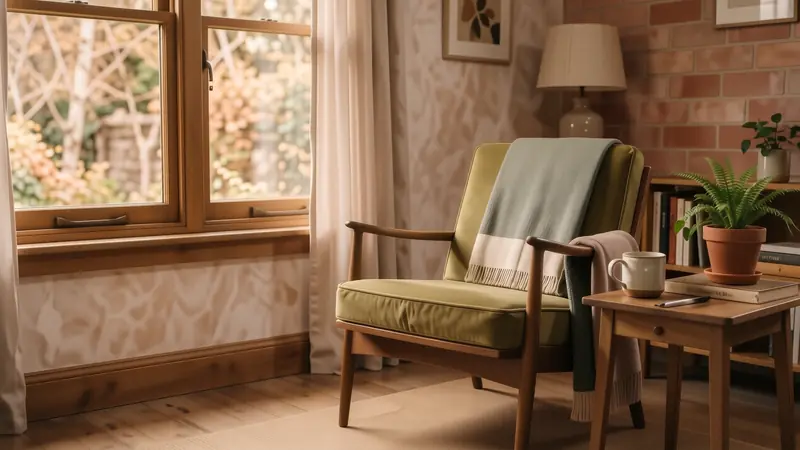
Your journey begins with the bones of the seat itself. A chair that looks beautiful but offers no lumbar support will leave you reaching for a heating pad after twenty minutes of reading. Look for deep-seated designs, like an oversized wingback or a rounded swivel chair, which allow you to tuck your legs up comfortably. If you are working with a small apartment, a mid-century modern armchair in a walnut finish provides structure without eating the entire floor plan.
Consider how much room you actually have for movement. A wide linen armchair might feel luxurious, but it needs at least 24 inches of clearance on either side to prevent the corner from feeling cramped.
- Wingback chairs: Best for head support.
- Club chairs: Great for deep lounging.
- Swivel chairs: Ideal for small rooms where you want to face different directions.
Layering Textures for Comfort
Softness is not just about one blanket; it is about the interplay of different weights and weaves. A single thin throw often feels insufficient when the temperature drops in late October. Instead, try layering a heavy chunky-knit wool throw over a smooth cotton cushion to create visual and tactile depth.
Mix your materials intentionally to avoid a flat look. Pairing a rougher boucle pillow with a sleek silk lumbar support adds interest that makes the space feel curated rather than cluttered. I personally love using a sheepskin rug draped partially over the seat of a leather chair to soften its edge.
Choose fabrics that breathe well if you plan on reading for hours. Linen and high-quality cotton are excellent choices because they don’t trap excessive heat against your skin.
Lighting the Way
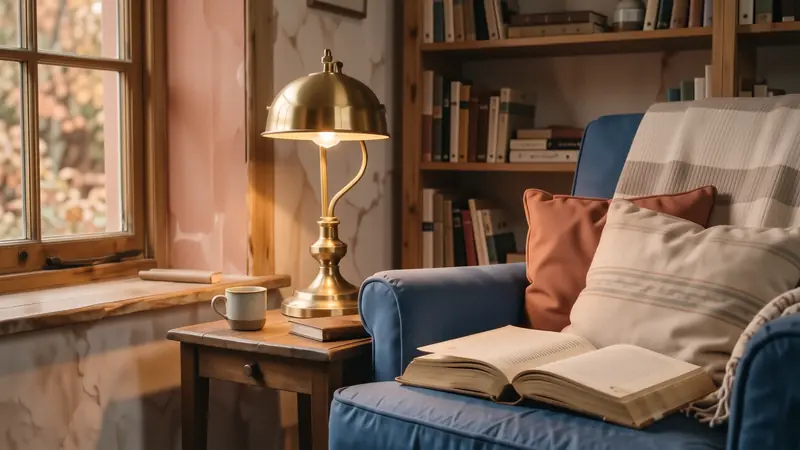
Shadows are the enemy of a good reader. You need light that is functional but never harsh or clinical. Avoid using overhead big lights, which can create glare on your pages and feel quite jarring in the evening. A dedicated floor lamp with a warm bulb—aim for 2700K color temperature—is the gold standard for creating an amber glow.
Positioning matters more than the fixture itself. Place your light source so it hits the page from behind or beside your shoulder to prevent shadows from your own head falling on the text. A brass pharmacy lamp offers a classic look and allows you to direct the beam exactly where you need it most.
If you are a renter, a rechargeable LED clip-on reading light can be a lifesaver for late-night sessions when you don’t want to wake anyone else in the house.
The Importance of Side Tables
A reading nook is incomplete without a place to rest your tea or your glasses. A tiny, sturdy surface prevents the dreaded ‘balancing act’ on your lap. You don’t need much space; even a small marble-topped pedestal table can serve this purpose perfectly.
Think about height relative to your seat. The tabletop should ideally sit just an inch or two above the arm of your cozy reading nook chair so you aren’t reaching too high or too low. This ergonomic choice prevents shoulder strain during long chapters.
If space is at a premium, look for a C-shaped end table that can slide its base underneath the chair itself. These are wonderful for tight corners where a traditional four-legged table would feel intrusive.
Creating a Cozy Bedroom Nook
You don’t need a dedicated library to find peace. Many people successfully tuck a cozy bedroom nook into the unused space near a window or between a wardrobe and the wall. This turns an awkward gap into a purposeful retreat.
In a bedroom setting, keep the color palette soft to maintain a restful atmosphere. Muted tones like sage green, dusty rose, or oatmeal work better here than high-contrast patterns. A small upholstered stool can double as extra seating for guests while remaining compact enough for a sleeping area.
Use a small area rug, perhaps 3x5 feet, to physically define the zone. This visual boundary tells your brain that this specific corner is for resting, not for chores or scrolling on your phone.
Bringing Nature Indoors
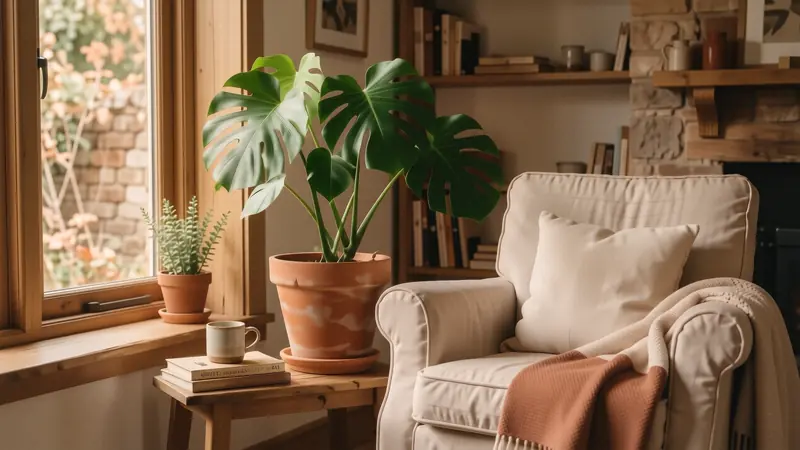
Greenery provides a sense of life that makes a room feel lived-in. A single, healthy plant can transform a sterile corner into a breathing sanctuary. For low-light corners, a Snake Plant or a Pothos is incredibly forgiving for beginners.
Place your plant on the floor near the chair or on the side table to create layers of height. The organic shapes of leaves break up the straight lines of furniture and books.
If you lack a green thumb, dried eucalyptus in a stoneware vase offers a similar aesthetic without any maintenance requirements. The subtle scent also adds to the sensory experience of your reading time.
Sound and Scent
True coziness involves all your senses. While sight is the most obvious, what you hear and smell dictates how deeply you can relax. A small white noise machine or even a simple wind chime near an open window can mask distracting street sounds.
Scent is a powerful tool for habit stacking. If you light a sandalwood candle every time you sit down to read, your brain will eventually associate that aroma with deep relaxation. This makes it much easier to switch off from work mode.
Avoid overly sweet or heavy scents like vanilla if you are reading in a small space. Instead, opt for something grounded like cedarwood, bergamot, or vetiver.
The Finishing Touches
Once the chair, light, and table are in place, look at the floor. A soft rug is essential to prevent your feet from hitting cold hardwood while you read. A high-pile shag or a woven jute rug adds that final layer of warmth.
Don’t forget about storage for your current reads. A small wicker basket tucked beside the chair keeps your stack of books organized so they don’t end up scattered across the floor. This simple addition makes the nook feel intentional rather than messy.
Even a single framed print on the wall behind you can anchor the space. Choose something with soft colors that complements your chosen textiles to tie everything together into one cohesive unit.
Frequently asked questions
How do I make a reading nook in a small apartment?
Focus on vertical space and multi-functional furniture. Use a slim floor lamp instead of a bulky table lamp, and choose an armchair with legs to show more floor, which makes the room feel larger.
What is the best fabric for a reading chair?
Velvet is excellent for luxury and warmth, while linen is better for breathability. If you have pets, look for tightly woven fabrics like microfibre that resist snagging.
Can I create a cozy nook in my kitchen?
Yes, if you have an empty corner, adding a small bistro chair and a tiny round table can create a lovely breakfast or reading spot away from the main cooking area.
What light temperature is best for reading?
Aim for bulbs between 2700K and 3000K. This provides a warm, inviting glow that isn't as harsh as daylight-balanced bulbs but still offers enough clarity to see the text.
More ideas → Cozy Reading Nook & Corner Ideas
Keep reading
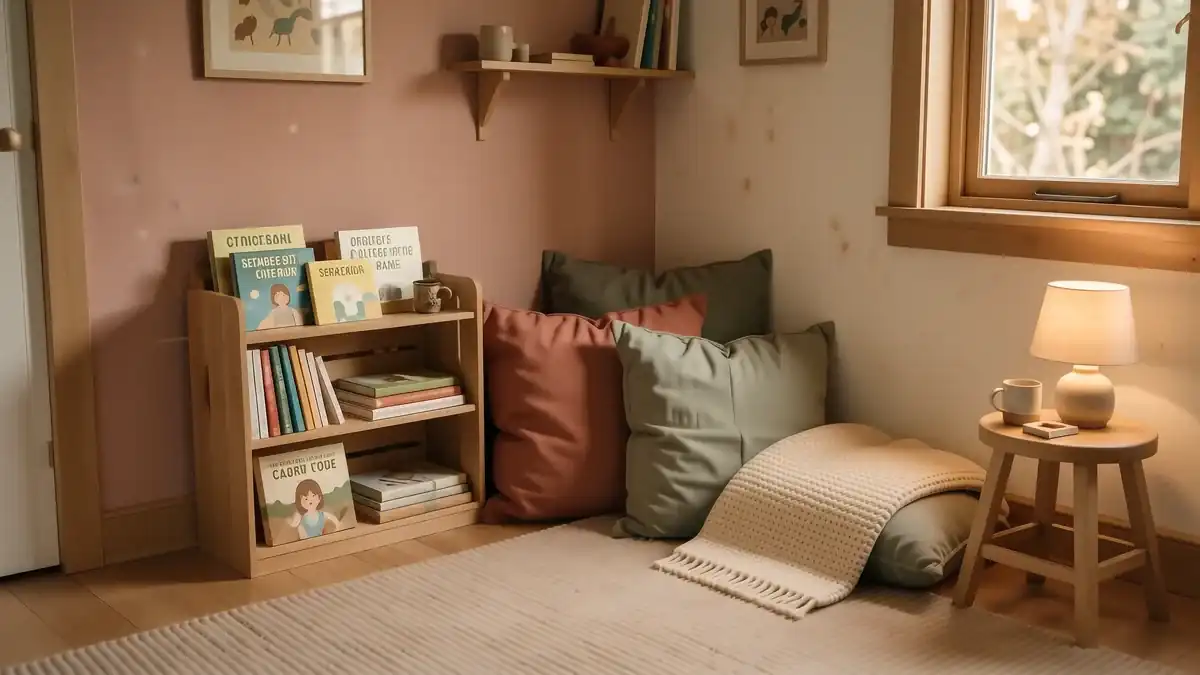
How to Build a Cosy Reading Nook for Kids
Create a magical cosy reading nook kids will love with these simple, renter-friendly ideas involving soft textures, warm light, and clever storage.
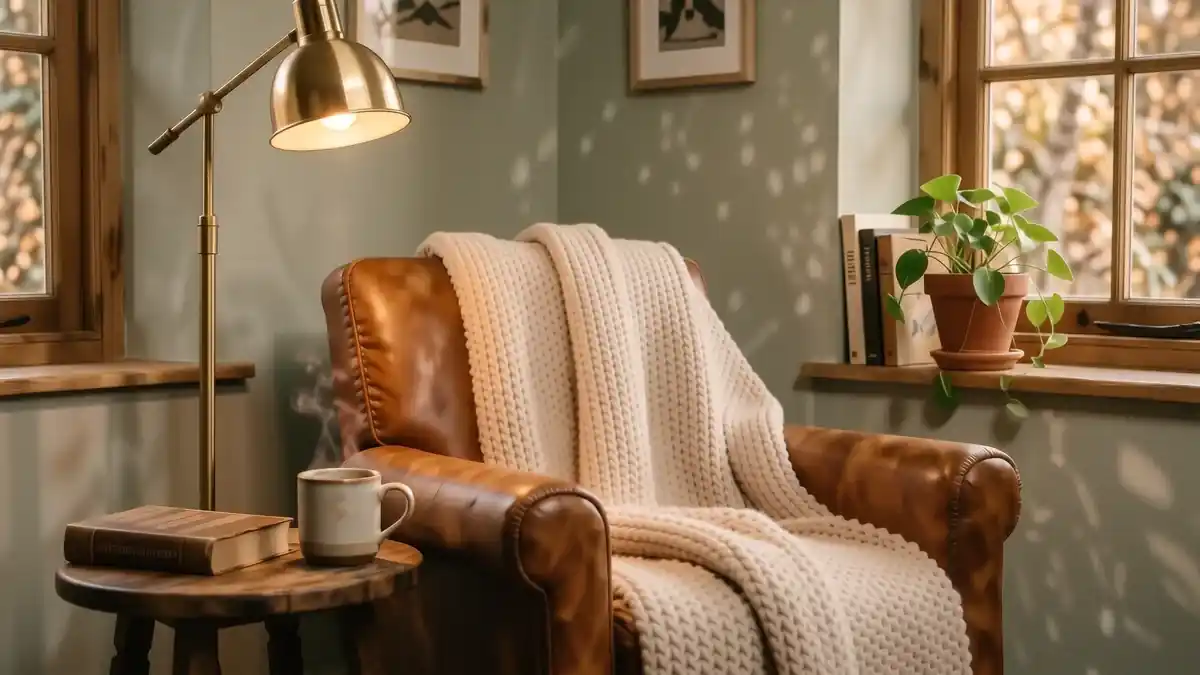
Simple Ways to Master Cozy Corner Decor This Weekend
Transform empty spaces into retreats with practical cozy corner decor ideas using warm lighting, soft textures, and renter-friendly styling tips.
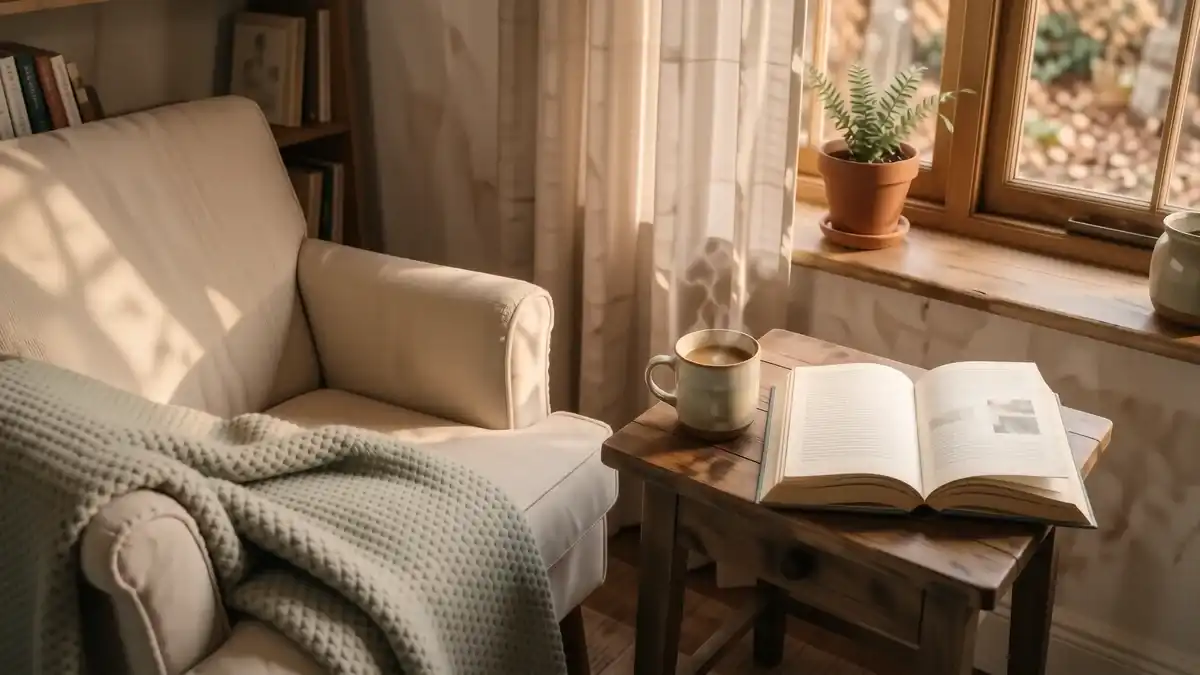
How to Create a Cozy Reading Corner Decor Haven
Transform any small nook into a sanctuary with these practical cozy reading corner decor ideas for renters and homeowners alike.
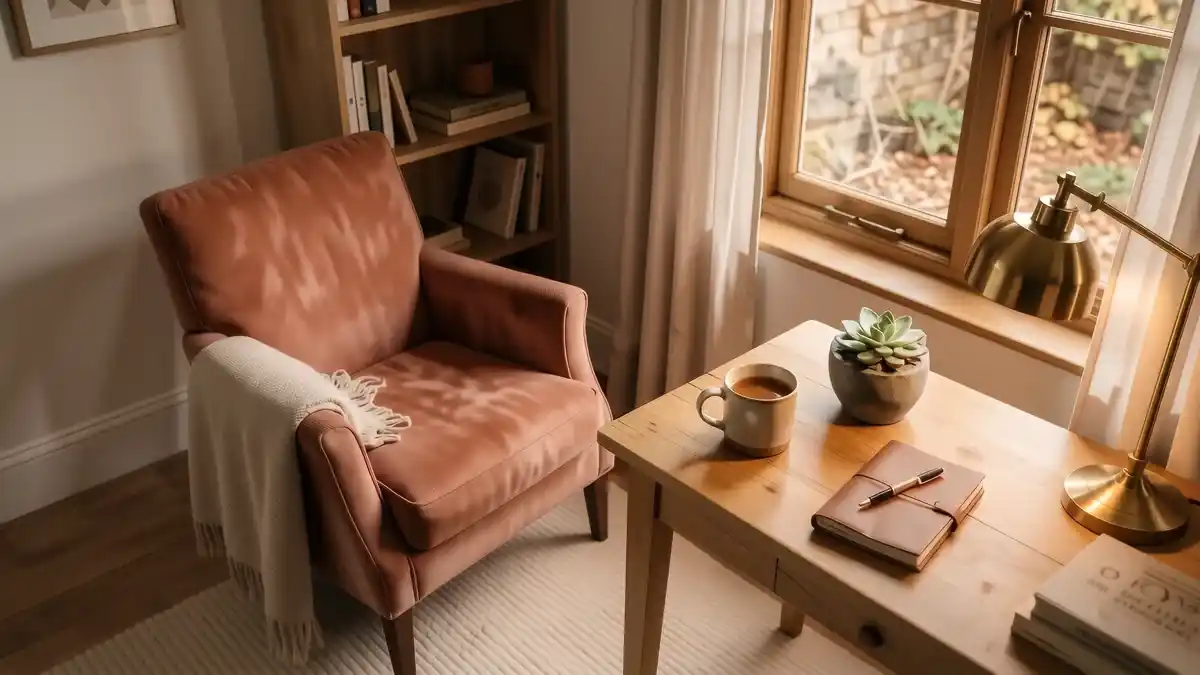
How to Choose a Cosy Home Office Chair
Simple cosy home office chair that shift the whole mood. Discover specific textures, lighting tips, and renter-friendly styling ideas for comfort.